Illustrators and Image Libraries on Artificial Intelligence and Copyright.
“In the three years since we saw the first text-to-image generative-AI program released to the public, image-makers, such as photographers, have yet to see any acknowledgement, compensation or transparency over the use of their personally invested visual works, scrapped from the internet without permission, as raw materials to develop these programs. These services evidently now compete directly with photographers’ and other visual artists’ livelihoods – our survey showed 58% of photographers affected by GAI (Feb, 2025) – and yet the companies responsible for the development and release of these programs continue to remain silent. Our joint statement with the AOI, DACS and PICSEL simply asks for respect, fairness and transparency in these matters, which any person or company with integrity would be willing to engage with us and uphold.”
Isabelle Doran, CEO, Association of Photographers
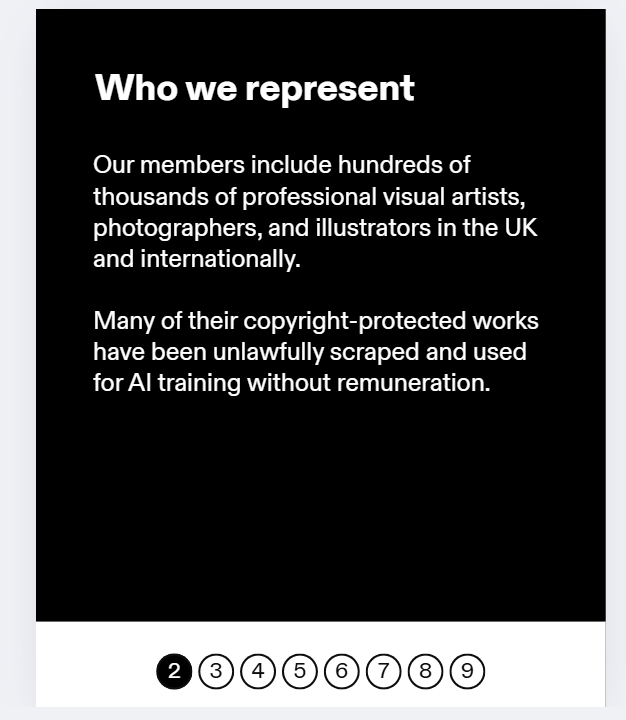
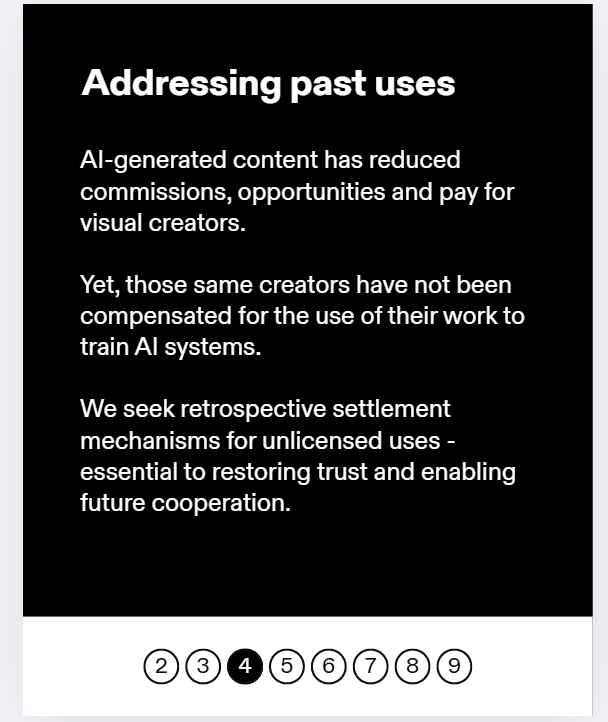
Professional visual artists, photographers and illustrators have experienced a reduction in commissions, opportunities and pay due to the competition of AI-generated content in the marketplace. Meanwhile, these creators have not received financial compensation for the use of their work to train the systems they are being substituted by. Many past ingestions of creative works for AI model development likely infringed rights in multiple countries. We seek retrospective settlement mechanisms where models trained on unlicensed works are exploited. This is essential to restore trust and enable future cooperation between the creative and AI sectors.
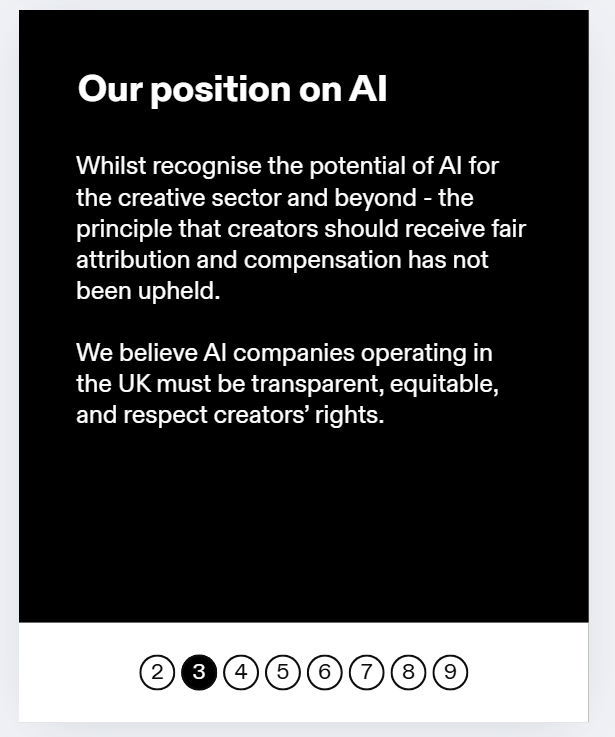
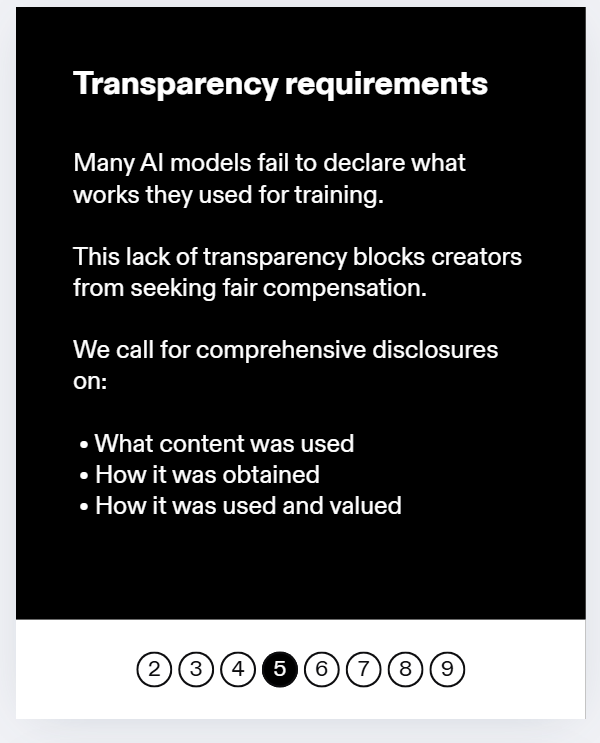
Many generative AI models do not declare what works they have used for training, which is a barrier to achieving compensation for creators’ indispensable contribution to the AI value chain. Transparency measures are being developed in other territories, such as California, and should be available to UK creators. We call for comprehensive disclosures on the use of creative works in existing AI systems, including: • What content was used: Clear documentation of works included in training datasets • How it was obtained: The methods and sources through which content was acquired • How it was used: The weight, relevance, and relationship of creative works to the commercial value generated by AI systems
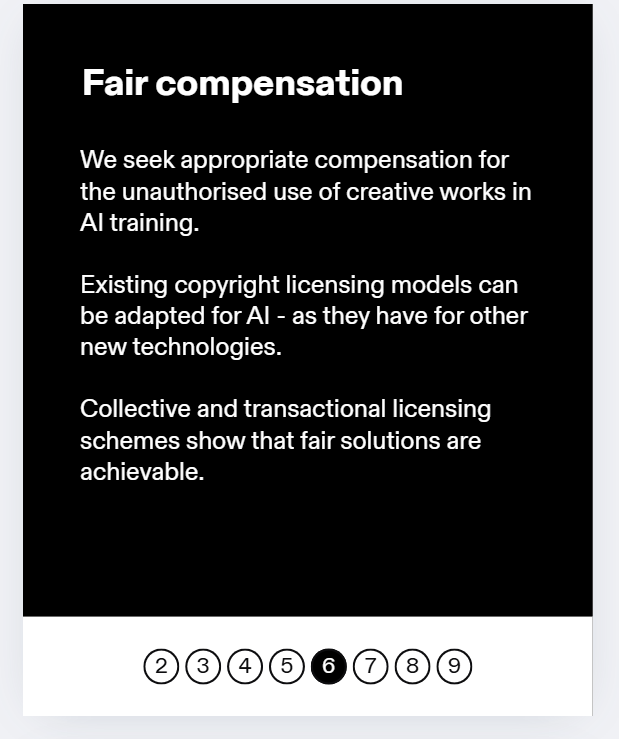
We seek appropriate compensation for the unauthorised use of creative works in AI training. While we acknowledge the complexities involved, including questions of valuation, distribution mechanisms, and identifying rightsholders, we firmly believe existing copyright licensing models can be replicated in the AI context, as it has done previously for many burgeoning technologies and innovations. Collective and transactional licensing schemes currently operated by collective management organisations, individual artists and representative companies demonstrate that administrative and commercial challenges can be overcome to create solutions to market demands.
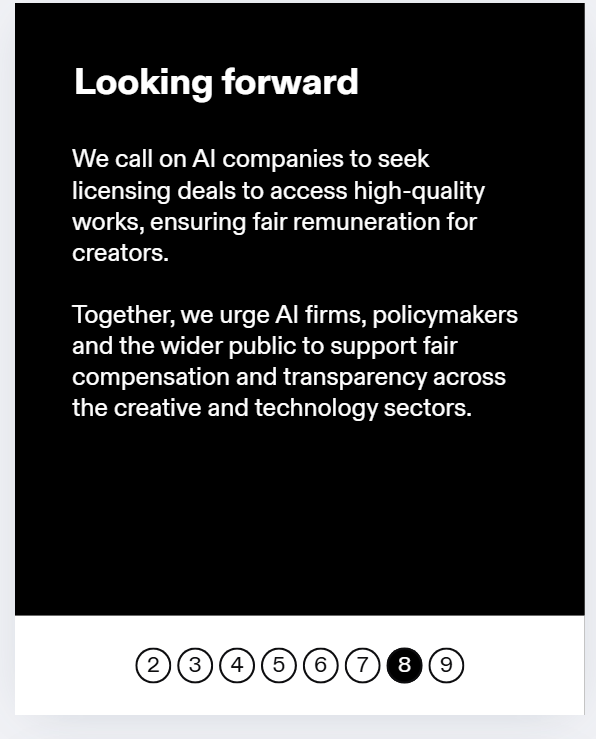
We believe that a collaborative dialogue between creators, representatives and technology companies can produce fair remuneration models which compensate visual artists for their contribution to the AI value chain – which starts with their work.
By addressing past uses and restoring the trust needed to initiate good-faith negotiations between AI firms and creators, both sectors can move forward with developing a roadmap for fair remuneration models.
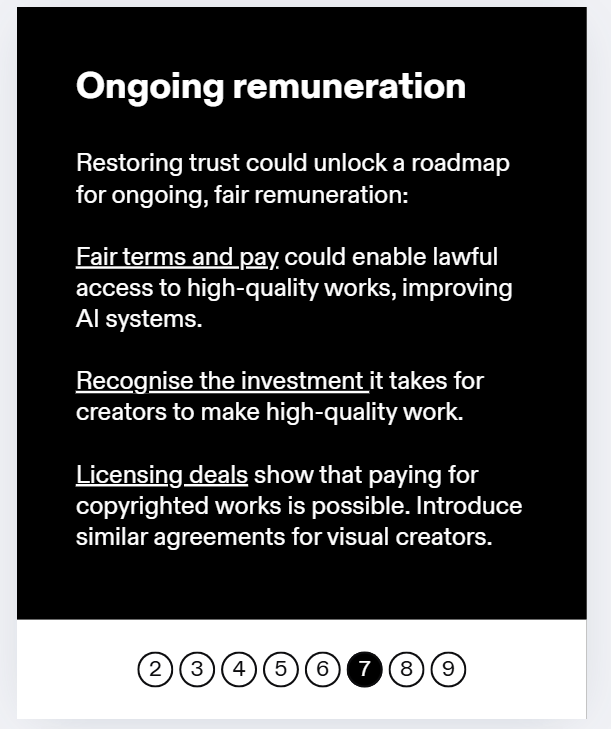
Indiscriminate scrapping for AI training without remuneration is not beneficial for ethical AI firms or creators. Whilst some high-quality works – which are key to high-quality AI products – are accessible online, an extensive portion of creators’ works remain behind paywalls, in private digital archives or stored offline. By agreeing fair terms for past and ongoing use, creators may be more agreeable to allowing AI firms lawful access to these catalogues, improving model quality.
Professional visual creators spend significant resources developing their practice, purchasing equipment and acquiring new skills to produce high-quality works. These works, often of high resolution with accurate metadata, are valuable for AI products. The personal investment creators put into their works must be recognised and recompensed.
Emerging licensing partnerships between AI firms and publishing, legacy media and social media companies have demonstrated remuneration for the use of copyright works is achievable. The visual sector has seen a significantly lower volume of such agreements and visual image rightsholders have not achieved value from existing deals.

The AOP Photography Awards are known as the ‘Oscars’ of the photography world. They celebrate excellence in the creative photography and image-making industry.
This is your chance to be seen by leading commissioners and names within the photographic industry.
Check out our 39th AOP Awards FINALISTS and WINNERS