
An ongoing series showcasing the work and practice of AOP Members
Tell us a bit about yourself and your work
Hi. My name is Sujata. I am a lens-based interdisciplinary artist. I am Indian and I relocated to the UK in 2009 to pursue a master’s degree in international relations at King’s College London.
My self-taught artistic practice is rooted in lived experience. A survivor of gender-based abuse, I place ‘otherness’ at the centre of my work; examining the politics of gender, silence and inherited structures through photography, traditional artistic practices, and community collaboration. My visual language bridges documentary and artistic form.
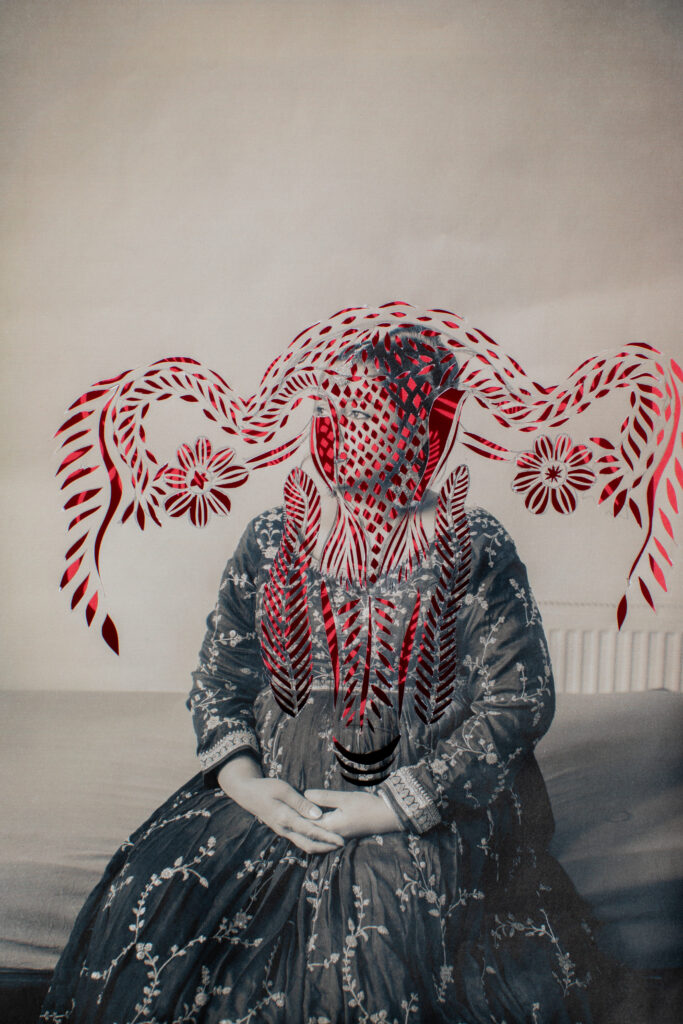
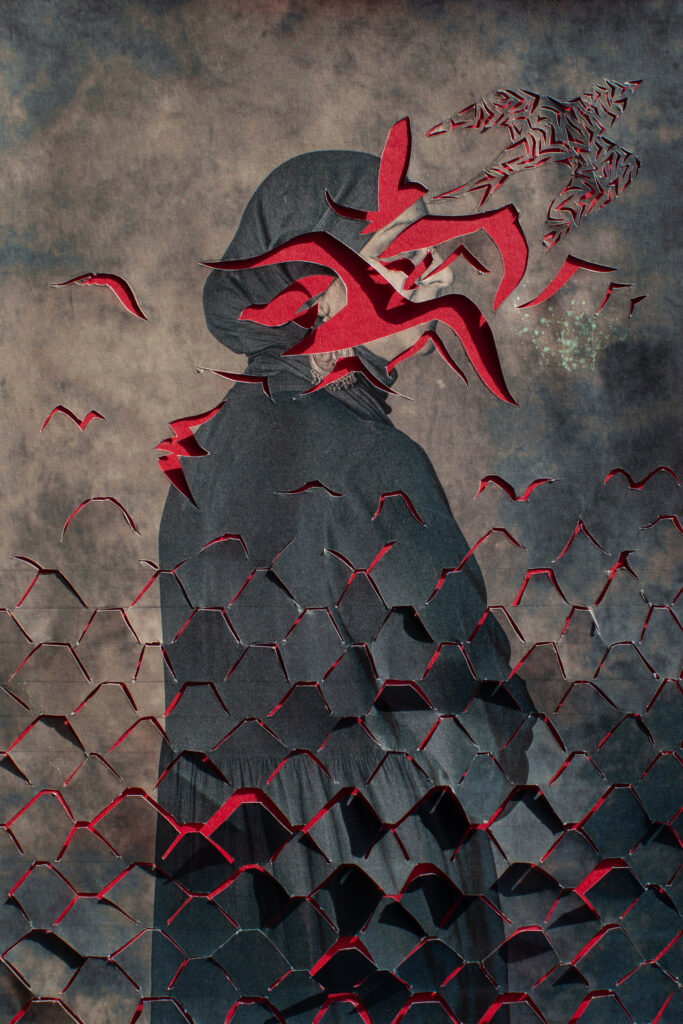
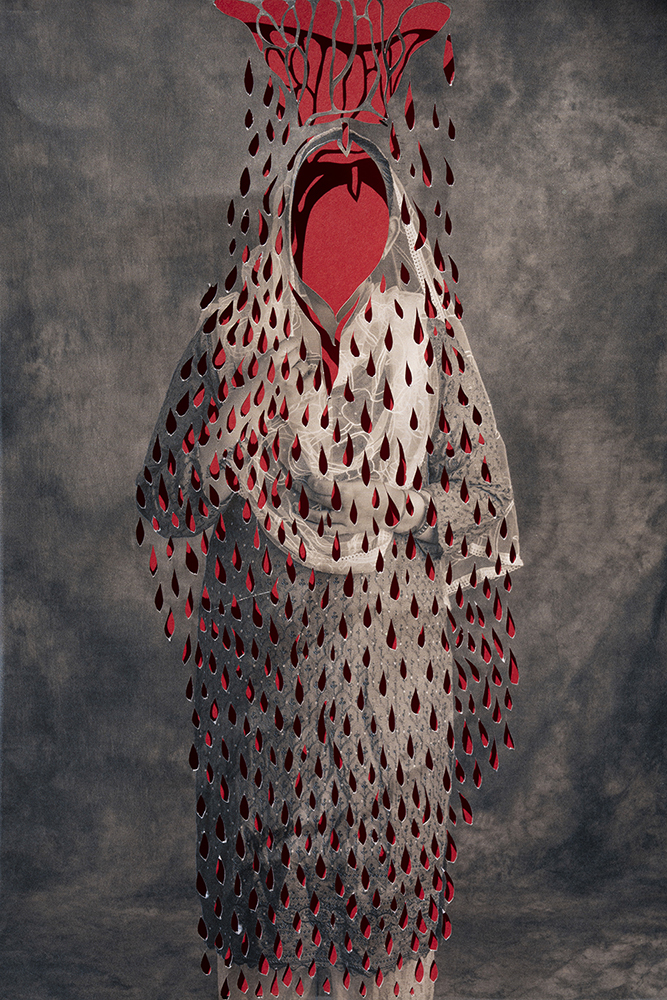
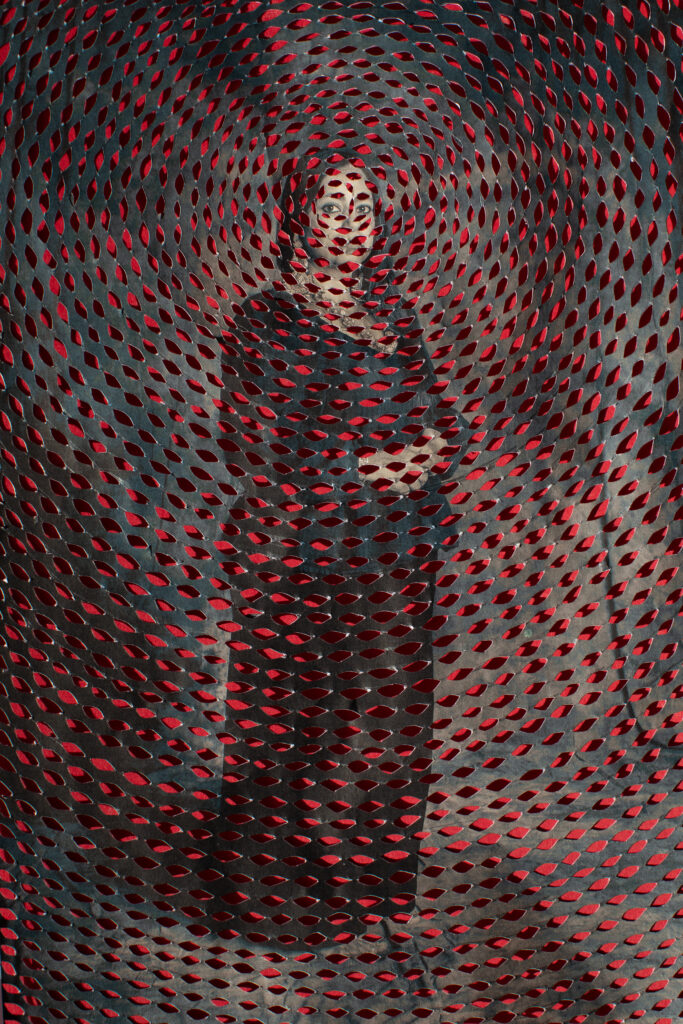
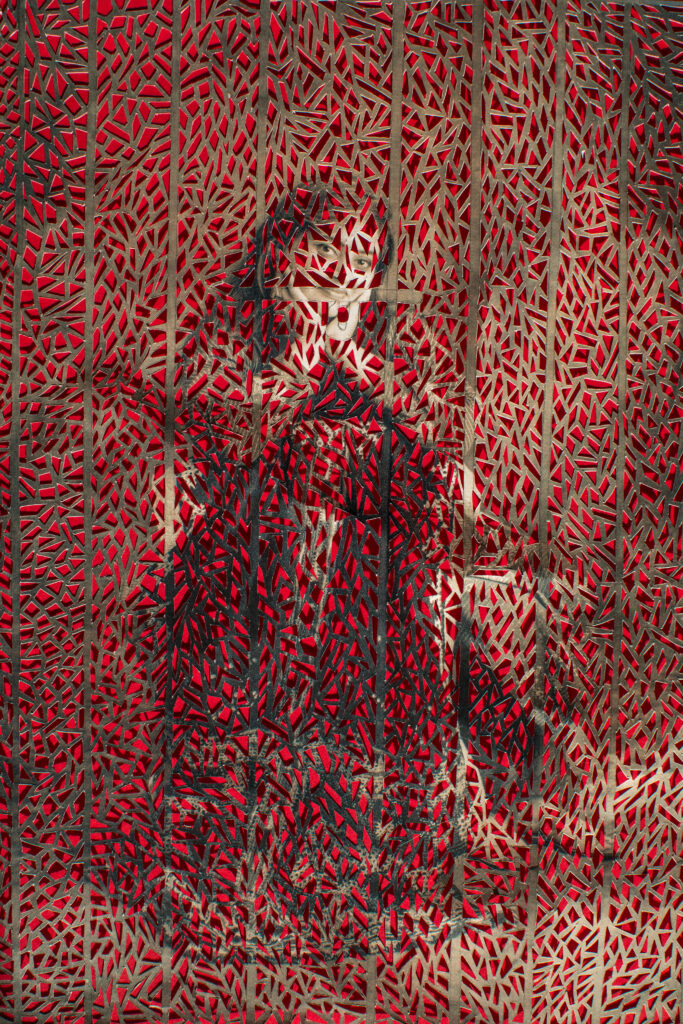
My ongoing project A Thousand Cuts, explores domestic abuse in South Asian communities. The project was recently awarded the Wellcome Photography Prize and is also the recipient of the 2024 Sony World Photography Award (Creative) and LensCulture Critics’ Choice.
Currently, I am developing new bodies of work on child sexual abuse and on women artisans in conflict-affected Kashmir. Both projects foreground oral histories and feminist methodologies.
A recipient of the Centre for British Photography Realisation Grant and the Culture Kings Creative Collaboration Fund, I regularly facilitate art therapy workshops and public engagements that bring trauma-informed storytelling into socially engaged spaces.
All images © Sujata Setia
What drives you creatively?
Almost everything I’ve created stems from lived experience. Whether it is childhood trauma, intergenerational violence, or witnessing the quiet resilience of those around me. These aren’t abstract “themes” I’ve chosen; they are landscapes I’ve personally walked through.
Your journey to the work you make now – what have been the challenges to reaching this stage?
There have been many… but those very challenges have shaped the core of my practice. As a self-taught artist, I never adhered to any particular aesthetic tradition. Instead, I created from my inner landscape, drawing on a visual language born of personal experience. The motifs, symbols, colours, and ethos that appear in my work are deeply rooted in my upbringing… growing up in a middle-class family in India, surrounded by strict patriarchal structures.
My early exposure to art was quite orthodox, and I was entirely unaware of what is often termed “high” or “avant-garde” art until much later. So my work has always been personal; deeply so. That, in itself, has been both the greatest challenge and the most meaningful achievement.
It’s a challenge because the art world can be hierarchical and rigid, with unspoken (and sometimes spoken) ideas about what qualifies as “good art” versus “bad” or “un-aesthetic” art. My work doesn’t fit neatly into any of these categories, and as a result, it took a long time for it to feel truly seen. But that lack of recognition never deterred me. I’ve continued to follow my own path, telling the stories I feel compelled to tell, in the way I believe they should be told.
Your reaction to winning such recognition for your recent project ‘A Thousand Cuts’.
These platforms are incredibly important because they create space for voices that have long been silenced. The fact that lived experiences of violence and abuse are being recognised as “art” is, to me, a historic shift. I can never diminish the significance of these recognitions. They not only validate the work emotionally, but they also enable it practically.
The Realisation Grant from the Centre for British Photography will allow me to bring the personal histories of 15 more domestic abuse survivors into both the public and artistic domains. That’s a huge support. And as for the Wellcome Prize… I honestly struggle to summarise what it has meant. I’ve been applying to various grants to pursue a project on child sexual abuse, and while recognition has come, funding has remained elusive. The monetary reward from Wellcome will help me get one step closer to beginning the research phase of that critical work.
Looking ahead, I hope to translate A Thousand Cuts into a book. That will require substantial funding and guidance, and if the Aesthetica Art Prize recognition leads to a win, it would be a huge step forward in furthering my mission: to speak from the margins through art.
Has this recognition changed your professional focus? Are you a different photographer? Artist?
I feel I am a different artist every day. Perhaps the greatest challenge for me has been resisting the urge to define or contain my practice within strict labels. Every personal experience reshapes, unsettles and transforms my visual language.
I began my career in 2014 as a child and family photographer, just a few months after the birth of my daughter. Becoming a mother, especially to a girl, stirred unresolved trauma from my own childhood, particularly memories of witnessing abuse. I was afraid I might not be able to break that cycle for her. That fear profoundly informed my early work. Through my childhood portraits, I created magical utopias, visions of a dreamlike world that offered me an emotional escape from the difficult memories of my own past.
But losing my mother in 2019 marked a critical shift. It forced me to relearn the visual language I had been using, this time not to conceal but to reveal. I began to explore what I had long buried beneath the surface of those idyllic images. This led to a gradual transition in my work, beginning with Changing the Conversation, which won the Open Award at AOP in 2023. At that point, I was still working primarily as a fine art portrait photographer, using the lens as my main expressive tool.
The COVID-19 lockdowns gave me something invaluable: time. Time to slow down, sit with my emotions and reflect on what it truly means to make an image rather than simply take one. That was the turning point. I began shifting into an interdisciplinary practice, merging photography with traditional art forms to expand my means of expression.
Going forward, I feel an even deeper need for interdisciplinary engagement, not just in form but in intention. My focus now includes grounding my visual work in ethical research and thoughtful exploration of the themes I take on. It is no longer just about what I see. It is about what I understand, uncover and hold space for.
What project to date are you most proud of?
That’s a difficult question. I don’t think I’ve ever looked at my work through the lens of pride. Each project has emerged from a place of deep personal reflection and emotional risk, and in that sense, they are all meaningful in different ways.
So much. There is still so much I want to share. Gender bias manifests in countless, often invisible ways in our daily lives and many of those subtle yet persistent realities remain undocumented. I feel a strong urge to give them a visual platform.
One project I’ve recently been developing is “kitchen abuse.” It looks at the intersection of climate change and gender-based violence, specifically how rising temperatures in countries like India are impacting women in domestic spaces. In India, women already spend an average of four hours a day in the kitchen. But with increasing heat, food spoils faster, cooking becomes more laborious, and time spent in the kitchen increases significantly. This extended exposure to high temperatures, often in poorly ventilated spaces, contributes to higher incidences of neurological and heart-related conditions in women compared to men.
Yet this reality is largely invisible and rarely, if ever, considered in global climate policy. It’s these overlooked intersections between environment, health, urban and rural living patterns and gender that I feel compelled to document. There is still so much to uncover, and visual storytelling can play a crucial role in that process.
What’s next for multi-award winning Sujata Setia?
The next project I will begin work on soon will foreground narratives of child sexual abuse through lived experiences of survivors. I see that as an interdisciplinary project too.
#WPP25 #Storytelling @AOPOpenawardwinner

The AOP Photography Awards are known as the ‘Oscars’ of the photography world. They celebrate excellence in the creative photography and image-making industry.
This is your chance to be seen by leading commissioners and names within the photographic industry.
Check out our 39th AOP Awards FINALISTS and WINNERS